
Learning & behaviour support.
When things aren't going the way they should at school or at home, whether that's how your child is coping and behaving or how they're learning. Paediatricians, psychologists and counsellors, working together to understand what's happening and what may help.
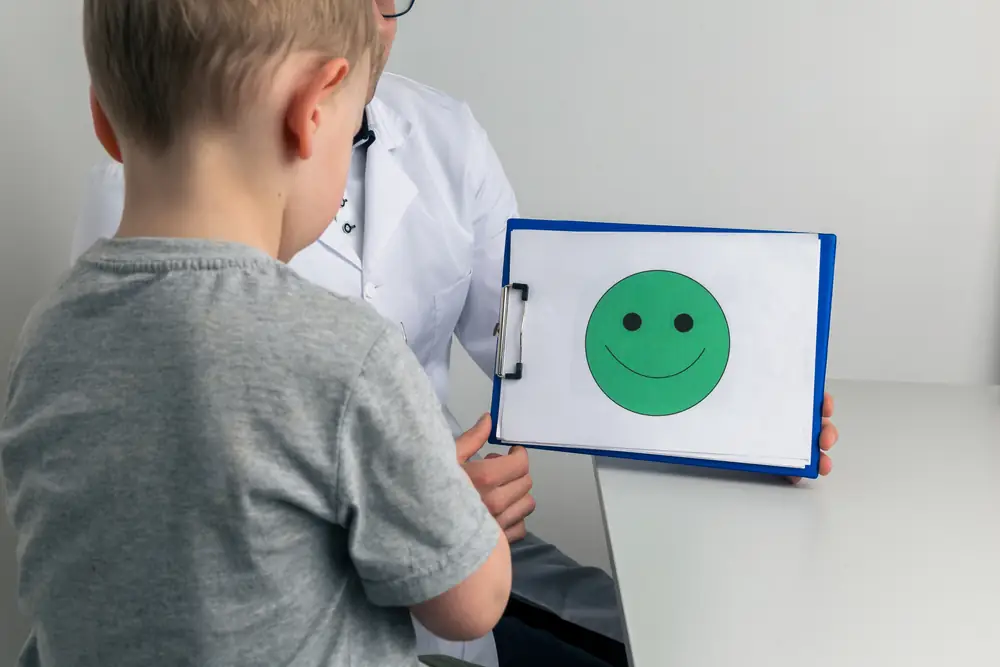
Behaviour and learning frequently travel together.
A child struggling at school might have a learning issue, a behavioural or emotional one, or both — and they often coexist. Reading that's hard makes school hard, which makes attention hard, which shows up as behaviour. Anxiety about performance affects learning. A cognitive profile that nobody has mapped can drive frustration that reads as oppositional.
Because the two overlap so often, Kids' Dr keeps them under one roof and offers two coordinated pathways. If you don't know which pathway fits, reception can guide you — or you can book with any Kids' Dr clinician and be redirected internally if a different starting point is better.
Two coordinated streams of care.
Behaviour & emotional support.
The flexible, therapeutic stream. Depending on what's happening, the right first step may vary.
- ①A paediatrician
For developmental or health questions at the heart of what's happening. Dr Martina Popelkova takes a special clinical interest in complex behavioural matters, including oppositional defiant disorder, eating disorders, ADHD and autism spectrum disorder. Dr Moe Moe Thinn is a Consultant Developmental and General Paediatrician.
- ②A psychologist
For emotional regulation, anxiety, low mood, or specific therapy work. Kids' Dr psychologists — Sandra Bell, Sue Boursiani and Cara Chillari — work with children and families across a range of presentations.
- ③A counsellor
For families seeking counselling support alongside or instead of psychology. Julia Magrin and Thao Tammy Trang are paediatric counsellors within Kids' Dr.
- Emotional outbursts that don't match the situation.
- Anxiety that affects school attendance, sleep or daily life.
- Sleep problems in children and adolescents.
- Oppositional patterns and family conflict.
- Toileting concerns.
- Eating concerns or fussy eating that's affecting nutrition or family life.
- Changes in mood, motivation or engagement.
- Social difficulties or friendship concerns.
- Concerns around screens, gaming or online activity.
- Family transitions (separation, bereavement, moving).
- Concerns following a diagnosis (ADHD, autism, learning difficulty).
- 01Understand. The first appointment focuses on understanding your child, your family context, and what's led to booking.
- 02Plan. A plan you're part of building. Home strategies, school coordination, referral within Kids' Dr, or a course of therapy.
- 03Coordinated care. Where multiple clinicians are involved, they communicate within Kids' Dr so you're not managing the coordination.
- 04Review. Regular review as things shift. Behaviour and emotional concerns evolve; the plan adjusts with them.
Learning & psychometric assessment.
The structured, report-based stream. Standardised assessment of cognitive strengths and learning profile, with a detailed written report.
- Sandra BellPsychologist · Neurodiversity-affirming practiceEarlwood
- Sue BoursianiPsychologistSans Souci (initial) · Earlwood (assessments)
- Cara ChillariPsychologistSans Souci (initial) · Earlwood (assessments)
- Concerns from teachers about learning or attention.
- Difficulty with reading, writing or maths not settling with usual approaches.
- A gap between what your child seems capable of and how they're performing.
- Application for school accommodations, integration funding, or gifted programs.
- Following an ADHD or autism diagnosis, where a cognitive profile helps inform support.
- Preparing for a change of school or education setting.
- Confirmation of a specific learning disorder (dyslexia, dyscalculia, dysgraphia).
- Assessment for intellectual disability or giftedness.
- Broader questions about how your child learns best.
- 01An initial conversation. Your assessor talks with you (and, where relevant, your child) about what's led to booking and how the assessment will run.
- 02Testing sessions. Structured tasks and questions that measure different aspects of thinking, learning and problem-solving. Spaced across more than one appointment to stay manageable.
- 03Additional information. Your assessor may ask for input from parents (questionnaires, developmental history) and school (teacher observations, work samples).
- 04A written report. A detailed report explaining the results and recommendations. Used for school accommodations, funding applications, therapy planning, or family understanding.
- 05A feedback appointment. Once the report is complete, you meet with the assessor to go through the findings and next steps.
- For school. The report supports applications for accommodations, integration funding, or specific programs. Schools use it to plan how they'll support your child.
- For therapy planning. Where the assessment identifies specific areas that would benefit from therapy, the report guides which therapies fit.
- For ongoing paediatric care. For children under paediatric follow-up at Kids' Dr, the psychometric report informs medical management and school communication.
- For family understanding. The report gives you a language and framework for supporting your child, and often reframes patterns that were confusing before.
Earlwood Medical Centre & Sans Souci Doctors.
Varies by pathway.
Paediatric consultations are privately billed with a Medicare rebate on a valid GP referral.
Psychology and counselling therapy may be eligible for Medicare rebates under a GP-prepared Mental Health Care Plan (Better Access). For eligible children with a complex neurodevelopmental condition or an eligible disability, additional rebated allied health sessions may be available under the Complex Neurodevelopmental / Eligible Disability pathway (M10), arranged by your paediatrician or GP.
Psychometric assessment is privately billed. Non-clinical psychometric assessments are GST applicable. Psychometric assessments are typically not eligible for the Mental Health Care Plan Medicare rebate, which covers therapy rather than assessment; some are eligible for private-health-fund rebates under psychology extras cover.
Reception confirms specific fees and expected structure at booking.
Common questions.
Where should we start?
If you're not sure which pathway fits, reception can guide you. Booking with any Kids' Dr clinician is a valid starting point, and we redirect internally where a different clinician is a better fit.
Do I need a referral?
For paediatric consultations, yes, for the Medicare rebate. For psychology or counselling therapy, a GP-prepared Mental Health Care Plan allows a Medicare rebate but is not required. Psychometric assessments can be booked directly.
How many appointments will we need?
For behaviour and emotional support, that depends on what's going on — a few appointments for some families, ongoing support for others. Psychometric assessment is typically spread across more than one session, with a written report and feedback appointment following.
Will the assessment give my child a diagnosis?
Sometimes. Psychometric assessment can identify specific learning disorders or intellectual disability. Where a broader diagnosis (like ADHD or autism) is a possibility, that pathway usually involves a paediatrician alongside psychometric testing.
What if my child doesn't want to come?
Kids' Dr clinicians are experienced with reluctant children and adolescents. The first appointment can be structured to build trust rather than push straight into therapy or testing.
Can school be involved?
Yes, with your consent. School coordination is often useful — for both pathways.
Does Kids' Dr work with families in crisis?
For non-emergency behavioural and mental health support, yes. For crisis situations (immediate safety concerns, suicidal thoughts, severe self-harm), please contact Lifeline (13 11 14) or your nearest emergency department.