
Skin cancer awareness.
Australia has the highest rate of skin cancer in the world. Understanding your risk, knowing what to look for, and taking practical steps to protect your skin are the most effective ways to reduce that risk. This page pulls together what matters most, from the Clarion practitioners at SMSG.
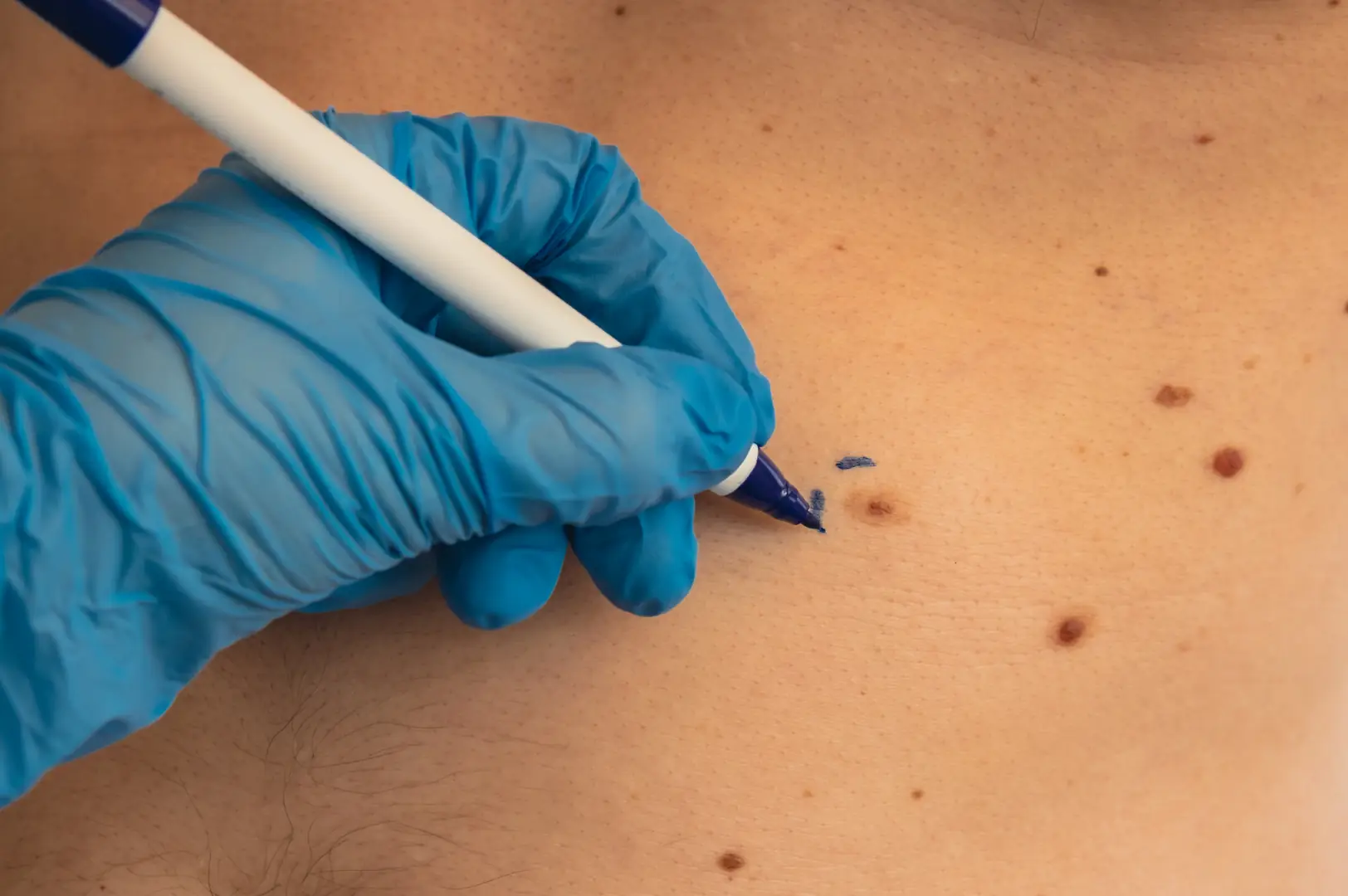
Two in three, by age 70.
Two in three Australians will be diagnosed with skin cancer before age 70. The vast majority of skin cancers are caused by exposure to ultraviolet (UV) radiation, from the sun or from artificial sources like solariums.
Skin cancer falls into two broad categories:
Non-melanoma skin cancer. Basal cell carcinoma (BCC) and squamous cell carcinoma (SCC) are the two most common types. They're rarely fatal when caught early but can cause significant local damage if left untreated. Non-melanoma skin cancer is the most common cancer in Australia.
Melanoma. Less common but more serious. Melanoma can spread beyond the skin if not detected and treated early. When caught in its early stages, however, melanoma is highly treatable with excellent outcomes.
Both categories are more common with age, but neither is exclusive to older adults. Melanoma is one of the most common cancers in Australians aged 15 to 39.
Who's at higher risk.
The ABCDE guide.
Any single feature is worth checking. Any combination should prompt a skin check.
The signs of skin cancer are generally noticeable if you know what to look for and check regularly.
For moles and pigmented lesions, use the ABCDE guide:
- Asymmetry. One half doesn't match the other half.
- Border. Irregular, ragged, notched or blurred edges.
- Colour. Uneven, with different shades of brown, black, tan, red, white or blue.
- Diameter. Larger than 6mm, though melanomas can be smaller.
- Evolving. Changing in size, shape or colour, or developing new symptoms like itching, bleeding or crusting.
For non-pigmented lesions, watch for:
- A new spot that persists longer than a few weeks.
- A sore that doesn't heal.
- A pearly bump that grows slowly.
- A rough, scaly patch that persists.
- A red, scaly spot that bleeds or crusts.
- A spot that itches or is painful.
Any spot that's changing, growing, bleeding or otherwise different from your other spots is worth checking.
A monthly habit.
Self-checks don't replace a professional skin check. They help you notice changes between checks so you can raise them with your GP.
A monthly self-check is a good habit. Do it in a well-lit room, preferably after a shower.
- Face and scalp: use a mirror, and part your hair to see the scalp.
- Ears: front and back, using a mirror.
- Neck, chest, abdomen: examine directly.
- Back: use a second mirror or ask someone.
- Arms and hands: including palms, backs of hands, and between fingers.
- Legs and feet: including soles, tops of feet, and between toes.
- Genital area.
Note anything new, anything that has changed, or anything that catches your attention. Photographs can help track spots over time.
Slip, slop, slap, seek, slide.
The most effective way to reduce your skin cancer risk is to reduce your exposure to UV radiation. The Cancer Council recommends five sun protection actions when UV levels are 3 or above:
- Slip on protective clothing that covers as much skin as possible.
- Slop on SPF 30 or higher, broad-spectrum sunscreen 20 minutes before going outdoors, and reapply every two hours or after swimming or sweating.
- Slap on a hat with a broad brim that shades the face, neck and ears.
- Seek shade.
- Slide on sunglasses that meet the Australian Standard.
Sun protection matters most between 10am and 3pm in most parts of Australia, and year-round in the northern parts of the country. The SunSmart app and Cancer Council Australia's Sun Protection Times give the UV forecast for your area.
Avoid solariums (banned for commercial use in Australia but sometimes used privately).
Regular skin checks with your GP catch cancers early, when they're most treatable.
Don't wait for it to “become something.”
Early is better. Skin cancer detected early is highly treatable.
Book a skin check if:
- You've noticed a new spot or a spot that has changed.
- You have concerns about a specific mole or lesion.
- You have risk factors for skin cancer and haven't had a check.
- You've been advised by a health professional to have a skin check.
- Your last skin check was longer ago than your GP recommended.
See our Full-Body Skin Checks page for what to expect at your appointment.